

This post about a common BPD trigger was requested by a follower on Instagram. I’m sorry it took so long for me to post!
In an old blog post, I explored how to make plans without triggering your partner with borderline personality disorder. But what if you’re the one with BPD and the trigger isn’t your partner going out, but you leaving them?
This is a common but often unspoken struggle for people with borderline personality disorder. Going out without your favorite person (FP) can create an overwhelming flood of emotions: fear, anxiety, guilt, sadness, even rage. You may find yourself battling intrusive thoughts like: What if they stop caring about me while I’m gone? What if everything changes? What if they realize they don’t need me? If you’ve experienced this, you’re not alone. This post will help you understand what’s happening internally and how to manage the emotional intensity that comes with leaving your FP behind—even if just for a short outing.
Note: these tips could be used for other BPD triggers too.
Self-Reflect: Get Curious About Your Reaction to the BPD Trigger
Awareness is the first step in learning how to cope with BPD triggers. When you feel that discomfort rising before or during a separation, take time to reflect—not judge, just observe. Ask yourself:
• What am I really afraid will happen while I’m gone?
• Do I feel like I’m abandoning my FP?
• Am I afraid they’ll abandon me—emotionally or physically—while I’m out?
• Do I fear things will shift between us when I return?
• Is there something deeper I’m trying not to feel?
Keep digging. Every answer you give yourself should prompt another question. Let’s say the fear is: “Things will feel different when I get back.”
Follow Up Questions:
“What do I mean by different?”
“FP might lose interest in me.”
“Why would they lose interest?”
“Because they might realize it’s more fun when I’m not around.”
Sometimes, that’s the core fear—and that’s okay. It’s not a truth; it’s a trauma-rooted belief. Understanding it is what helps you begin to heal it.
This kind of reflection takes practice. Be patient with yourself, and treat your inner world gently. BPD isn’t your fault.

Cope Ahead: Visualize Success Before it Happens
Coping ahead is a DBT strategy that’s especially useful when you know a situation might trigger you. In the days before going out without your FP, visualize yourself handling it in a regulated, confident, and compassionate way.
Picture the outing. What do you say to yourself before you leave? How do you respond if a wave of fear hits mid-event? What calming statements or tools do you use to ground yourself? Imagine coming back home and seeing your FP, feeling relief—not panic.
You’re not just preparing for an event—you’re training your nervous system to believe it can survive something difficult.
Use Coping Skills—Before, During, and After the BPD trigger
Emotion regulation and thought-challenging skills can help when BPD-fueled fears take over.
Try:
• Opposite Action (e.g., go out despite the urge to stay and spiral)
• TIPP Skills (for reducing physical anxiety fast: cold water, intense movement, paced breathing)
• Wise Mind Statements (e.g., “I feel afraid, but this fear doesn’t mean I’m unsafe.”)
• Self-Soothing Tools (comfort items, scents, grounding exercises)
If distorted thoughts creep in—like “They’ll forget about me”—challenge them gently.
→ “Has that ever actually happened before?”
→ “What evidence do I have that they care?”→ “If the roles were reversed, would I forget them?”
A Closer Look at BPD
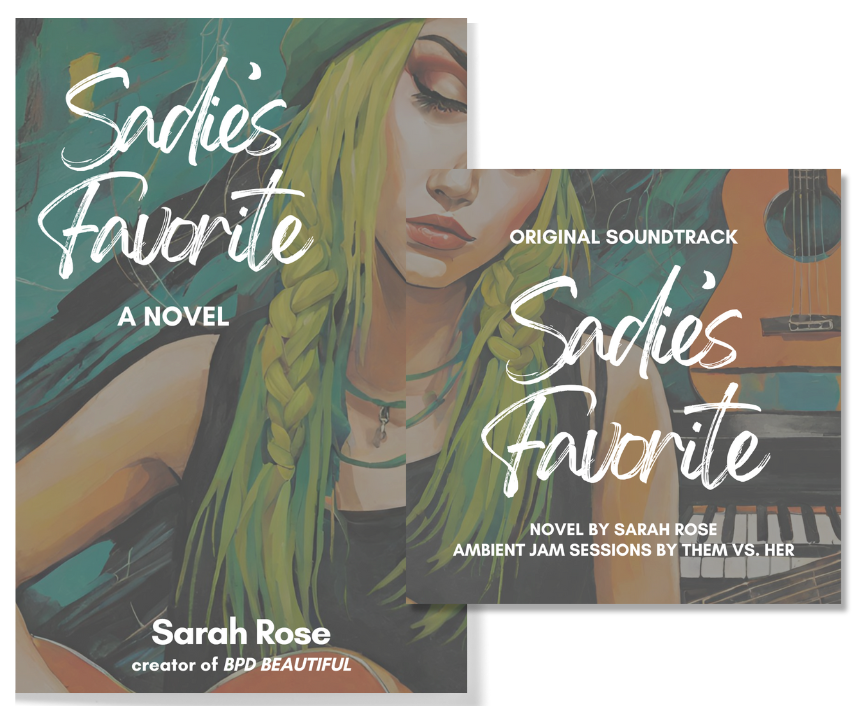
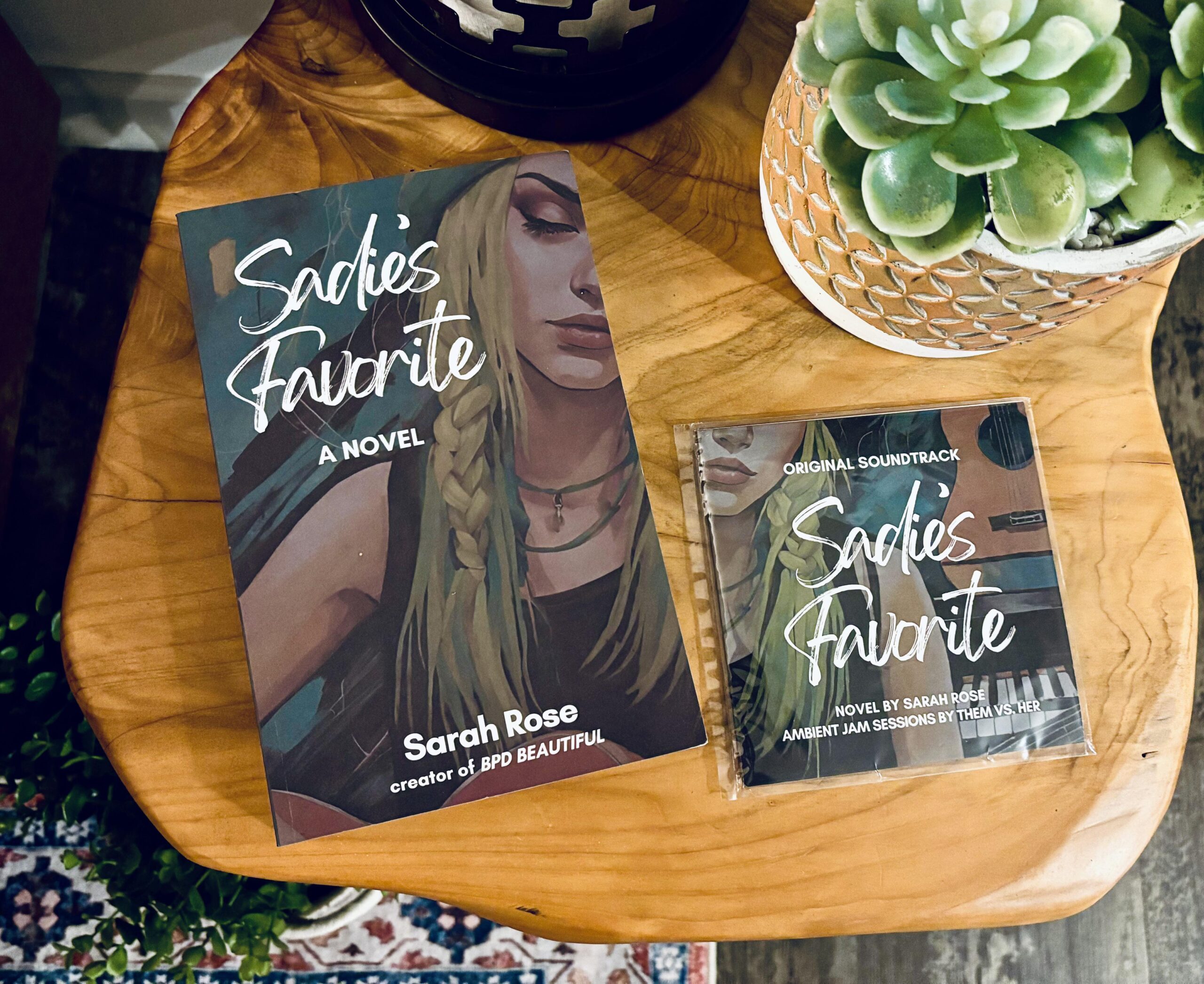
Sadie’s Favorite: A Novel + Original Soundtrack explores BPD recovery, favorite person relationships and healing from trauma bonds.
Be Honest—With Yourself and Your Partner about the BPD trigger
If you feel safe doing so, share your struggle with your partner in a grounded, vulnerable way. Not to seek reassurance, but to build intimacy through honesty.
Try something like: “Sometimes when I go out, I feel this irrational fear that something will change between us. I know it’s not fair or true—it’s just how my brain reacts. I’m working on it, but I wanted you to know.”
Naming the fear takes its power away. And it allows your partner to support your growth instead of guessing what’s wrong.
Desensitize in Small Spurts
Start small. You don’t have to dive into an all-day outing right away. Take a walk around the block. Go to a coffee shop alone. Practice being apart from your FP in short, intentional bursts. Over time, your body will learn that separation isn’t abandonment—and that independence doesn’t mean disconnection.
Final Thoughts
Going out without your favorite person can feel like ripping away a lifeline—but it doesn’t have to. With awareness, compassion, and the right coping tools, you can break the cycle of fear around this BPD trigger and build a stronger sense of self.
You are not too much. You are not clingy. You are not broken. You’re navigating life with a nervous system that’s learned to associate separation with danger. But with practice—you can unlearn that, too.
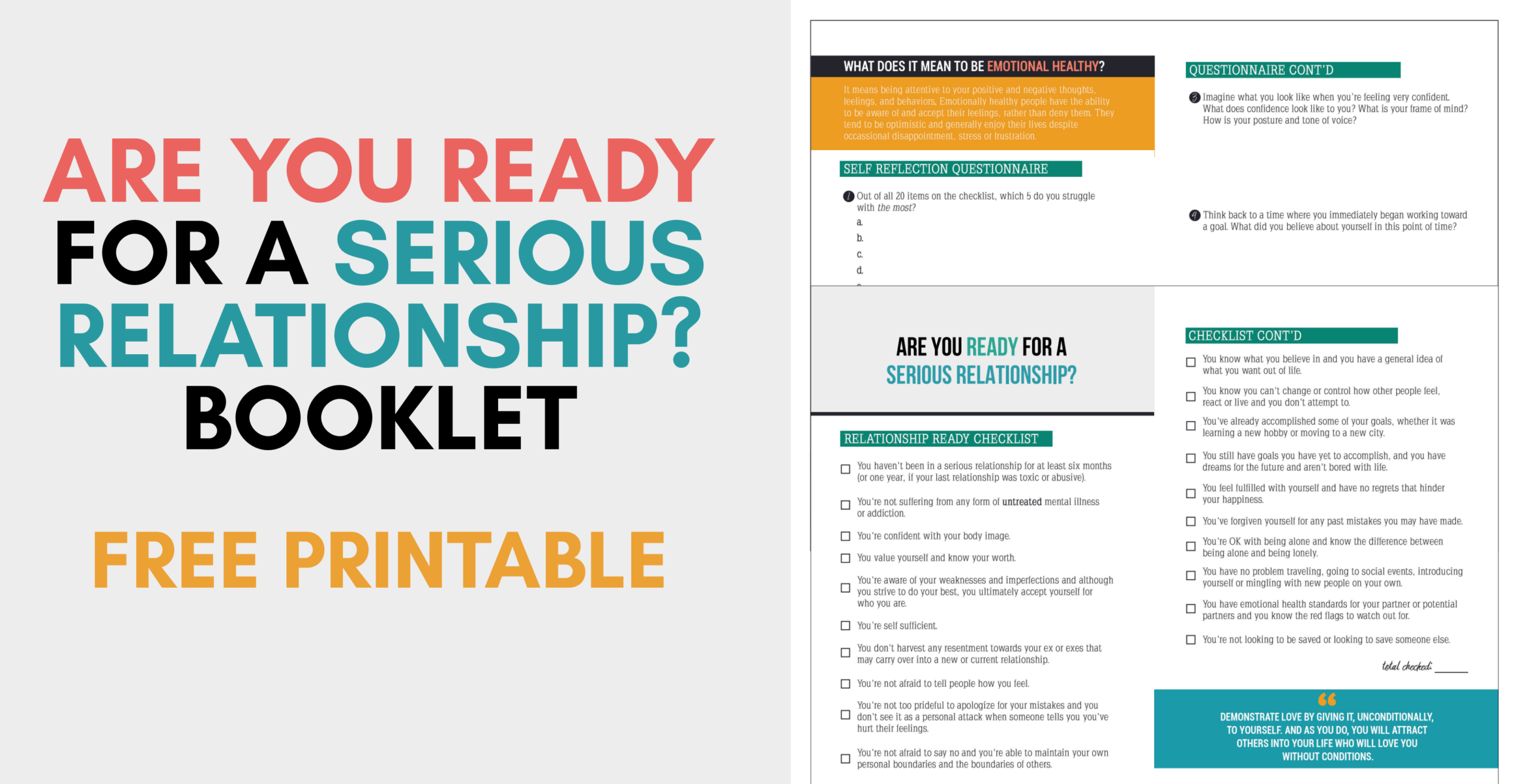
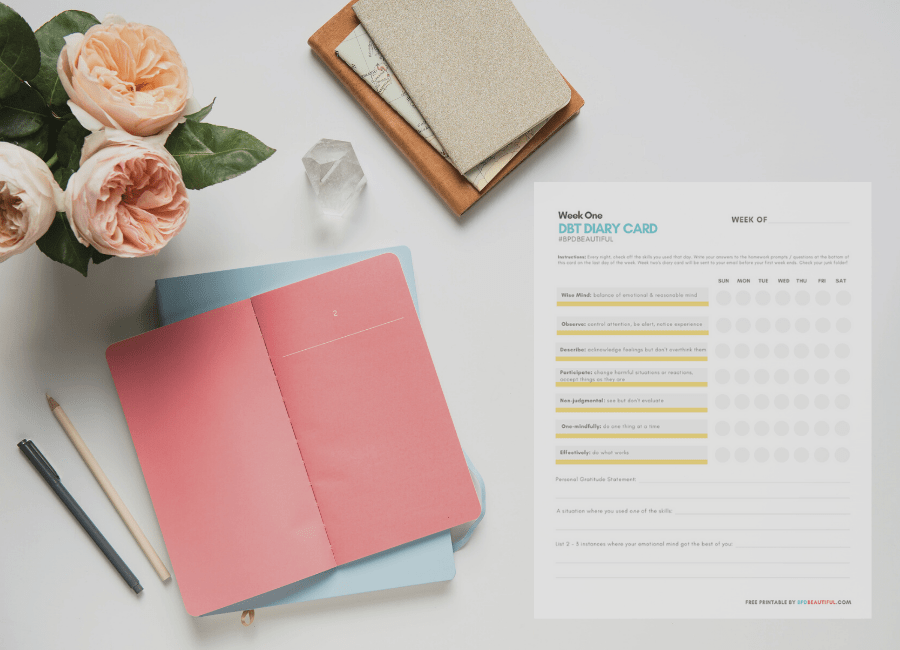
DOWNLOAD FREE PRINTABLE
BPD Resources
BPD in Fiction: Sadie’s Favorite by Sarah Rose is a Novel + Original Soundtrack that touches on BPD recovery and overcoming toxic “favorite person” (FP) relationships.
Join a Support Group: Study healthier coping skills with others. For people with BPD 18+ worldwide. Secure your spot! Join now.
Private Coaching: Get 1-on-1 support from someone with lived experience of BPD and remission by booking a call.
Manage your BPD symptoms with a printable workbook.
See our recommended list of books about BPD.
Start a Discussion
Do you relate to this post? Share your experience in the comments!
Pin This Post
Liked this post? Want to spread awareness of BPD and Jesus? Help support BPD Beautiful by pinning it on Pinterest.






Leave a Reply
You must be logged in to post a comment.