
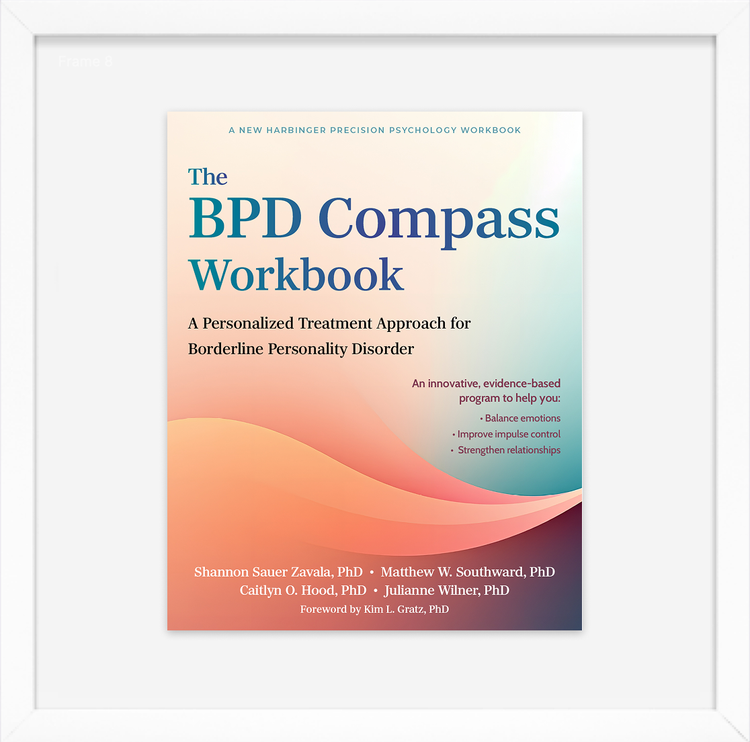
This post is sponsored by Shannon Sauer-Zavala, PhD., one of the authors of The BPD Compass Workbook
People with BPD work hard and recover during treatment, contrary to common myth.
When I meet with a new client and give the feedback that they meet the criteria for borderline personality disorder (BPD), I always caution them to take what they see on the internet with a grain of salt. Myths about BPD abound, from articles indicating that this condition is “untreatable” to someone in the comments suggesting that their ex “definitely has BPD.”
People with BPD may also experience substantial stigma from treatment providers (Rogers & Acton, 2012), many of whom refuse to treat patients with this condition (Sulzer, 2015). Unfortunately, access to specialist providers with the expertise and inclination to treat BPD is limited (Iliakis et al., 2019), and many patients lack the financial resources to afford gold-standard, intensive care (Tomko et al., 2014).
People With BPD Respond Well to Treatment
It is possible that myths about BPD and its treatment have perpetuated stigmatizing beliefs that ultimately limit the number of providers willing to take on BPD clients. One common myth about BPD is that this condition is lifelong and untreatable. Until recently, the field lacked long-term data on recovery rates for individuals with BPD. However, we now know that people with BPD experience reductions in symptoms over time, and that these improvements can be hastened with treatment. Longitudinal studies suggest that over 90 percent of patients no longer meet the criteria for this condition within 10 years of initial diagnosis, and once a patient’s symptoms remit, recurrence is unlikely (Zanarini et al., 2010).
Beyond symptom remission, these longitudinal studies show that over 50 percent of patients experience “recovery,” which is defined as remission of symptoms plus good social and occupational functioning. Although these data suggest that improvements in BPD symptoms can occur naturalistically, there is also evidence that the time frame to achieve symptom relief can be substantially shortened by treatments developed for BPD (Bateman & Fonagy, 1999; Linehan, 1993). In fact, my team and I recently tested a new treatment for BPD that is 18 sessions long; we found that this short-term treatment was associated with improvements in BPD symptoms that are similar to one year of other treatments (Sauer-Zavala, 2023).
People With BPD Are Rewarding to Work With
One prevailing myth is that BPD patients are difficult to work with. Indeed, BPD patients have been described as manipulative and attention-seeking. These perceptions of BPD may have developed, in part, because many individuals with this condition engage in risky activities (e.g., self-injurious behaviors, substance use, binge eating, unsafe sex). Given that life-threatening symptoms often require therapists to react quickly to provide support, they may inadvertently result in clinicians feeling manipulated based on the assumption that clients are attention-seeking. Of course, most of the available evidence indicates that people with BPD engage in risky behaviors to escape from intolerable negative emotions. In other words, their intention is to regulate intense emotions, not to manipulate their therapists. Importantly, even if a therapist feels manipulated, that does not mean it was the intention of the patient.
In my experience, people with BPD are trying really hard. They want to feel better and are doing the best they can. I love helping people with this condition see the function of their behaviors, even if they ultimately want to change them. People with BPD are used to having people tell them they’re crazy, so it can be incredibly rewarding to validate the fact that their behaviors probably worked for them at one point.
Many People With BPD Are Not High Risk
Most therapists assume that people with BPD will attempt suicide while they are working together. It is worth noting that only a small subset of patients with BPD endorse the self-injury diagnostic criterion; epidemiological data suggests that 80 to 97 percent of individuals with BPD are not actively suicidal (Grilo & Udo, 2021; Yen et al., 2021). Moreover, self-injurious behaviors occur in the context of other disorders (e.g., anxiety, depression, eating disorders; Bentley et al., 2015), and patients with these conditions are not labeled as manipulative. These data suggest that providing treatment to many patients may be more feasible in generalist clinics than previously thought.
Why My Team Developed a New (Short-Term) Treatment for BPD
Given barriers to accessing mental health care in general and particularly for patients with BPD, our goal was to create an intervention that 1) could be applied in generalist mental health care settings and 2) would be relatively easy to train across various professions (e.g., social workers, licensed mental health counselors, psychologists, psychiatrists).
Although we fully acknowledge that severe forms of BPD require intensive specialist treatment, there is evidence that usual care is beneficial for this condition (Finch et al., 2019). Thus, we designed BPD Compass to be delivered in weekly, 50-minute outpatient sessions in line with typical service delivery models. Additionally, both patient-level factors (e.g., difficulty affording treatment; Tomko et al., 2014) and system-level factors (e.g., long waitlists) underscore the need for efficient yet flexible treatments.
Another important consideration for maximizing the widespread dissemination of an intervention is the burden placed on clinicians to deliver it. We elected to use a cognitive-behavioral approach given that CBT is reported as the primary theoretical orientation by most providers in typical mental health service settings (Wolitzky-Taylor et al., 2019), and most training programs for clinical psychology focus on developing student competencies in delivering CBT (Heatherington et al., 2012). Although we believe that adopting a manualized, CBT approach increases the disseminablility of BPD Compass, it is important to note that the eclectic use of other theoretical orientations is not precluded; indeed, psychodynamic or interpersonal techniques that use the patient’s relationship with their therapist as a vehicle for new learning can be integrated within structured CBT exercises (Westen, 2000). Overall, by making it clear that BPD can be successfully treated in generalist settings, the stigma associated with this condition may be diminished.
If you or someone you love has BPD, the BPD Compass Workbook is available preorder (shipping August 1). We’re so excited to be able to share the treatment that has helped our patients with a wider audience.
BPD Resources
BPD in Fiction: Sadie’s Favorite by Sarah Rose is a Novel + Original Soundtrack that touches on BPD recovery and overcoming toxic “favorite person” (FP) relationships.
Join a Support Group: Study healthier coping skills with others. For people with BPD 18+ worldwide. Secure your spot! Join now.
Private Coaching: Get 1-on-1 support from someone with lived experience of BPD and remission by booking a call.
Manage your BPD symptoms with a printable workbook.
See our recommended list of books about BPD.
Start a Discussion
Feel free to share your experience with BPD stigma from a mental health professional in the comments. We’d love to hear from you and give you some hope!
Pin This Post
Liked this post? Please help support BPD Beautiful and spread BPD awareness by pinning it on Pinterest.










Leave a Reply
You must be logged in to post a comment.