

[Note: This post was originally published in July 2020, during the first year of my treatment, before I was in remission.] People with BPD are often labelled as dramatic, attention seeking or crazy. While it may look that way from the outside, what’s going on inside is A LOT more complex. What people with BPD need—especially during BPD episodes, is patience, validation, support and reassurance. If you’re new to BPD Beautiful, I’m Sarah Rose and I was diagnosed with borderline personality disorder (“BPD”) in late 2019. This blog is where I used to document my treatment. After I reached remission, my team and I grew the BPD Beautiful platform to be a resource for others. I published this post in hopes to help loved ones better understand BPD and to spread BPD awareness. In the middle of the post, I included real-time documentation of one of my BPD episodes, back in the early days of treatment, so you can see a real life example of a borderline episode and the types of thoughts & feelings they typically induce.
Disclaimer: I’m not a mental health professional. My experience with borderline personality disorder, BPD triggers or BPD symptoms do not necessarily reflect another person with BPD’s experience, triggers or symptoms. Post may include affiliate links or sponsorships at no extra cost to you.
What are Borderline Episodes in Borderline Personality Disorder?
Borderline episodes (also called BPD episodes or a borderline personality episode) are intense emotional reactions that feel overwhelming and hard to regulate. These episodes BPD sufferers experience are usually triggered by perceived rejection, abandonment, conflict, or emotional stress. What does a BPD episode look like? It can include intense anger, panic, sadness, impulsive behavior, dissociation, or shutting down completely.
Borderline episodes are not “attention seeking” — they are nervous system responses rooted in emotional sensitivity and trauma. According to research on emotional dysregulation and treatments like DBT, these reactions are tied to heightened emotional vulnerability and slower return to baseline. Understanding borderline episodes as nervous system overload — not character flaws — is the first step toward healing.
BPD Support Groups: Practice healthy coping skills & get consistent support. Groups run from Sept 2026 to Jul 2027. Secure your spot! Join now.
What Causes BPD Episodes?
In my case—BPD episodes are usually caused after my fear of abandonment or fear of rejection are either triggered by…
- An outside stimulus: an innocent joke taken the wrong way or being left out of a conversation my BPD brain deems important (even if it’s really not when I think about it later, logically).
- My own distorted thought processes: obsessing over a stressor before it even happens, reliving a traumatic or upsetting memory that causes me to “split” (the infamous BPD splitting).
BPD episodes (for me at least) are usually started by the former and drawn out by the ladder. They can last anywhere from a couple minutes to several hours.
Looking for Characters with BPD? The novel + original soundtrack Sadie’s Favorite by Sarah Rose explores BPD recovery and abusive “FP” relationships. Read First 6 Chapters.
What are Common Signs of a BPD Episode?
The most common signs of a BPD episode include intense mood shifts, fear of abandonment, black-and-white thinking (splitting), impulsive actions, and emotional overwhelm. Some people experience dissociation, self-harm urges, or BPD making up scenarios in their mind that feel completely real. You may notice racing thoughts, panic, anger outbursts, or withdrawal. The signs of a BPD episode often escalate quickly after specific BPD triggers, especially in relationships. What does a BPD episode look like from the outside? It might appear dramatic or reactive, but internally it feels like emotional survival mode. DBT describes this as moving into “emotion mind,” where feelings override logic.
Common BPD Triggers
Common triggers for BPD episodes can be…
- Delayed responses
- Being ignored
- Short or unmoved responses
- Being told no
- Having ideas or suggestions ignored
- Being left out of a conversation or event
- Loud noises
- Being laughed at
- Unmet needs
- Disappointing others
- Unmet expectations
- Constructive criticism or negative feedback
- Being proven wrong
- Separation from Favorite Person
- Not being kept in the loop
- Being called out
- Getting laid off or told to leave
- Change of plans
- Not understanding a joke between other people
- Being replaced
- Lack of quality time with closest loved ones
- Traumatic memories
- Being disagreed with
- Being ganged up on
Does this mean you should walk on eggshells around someone with borderline personality disorder? No. It doesn’t. However, there are things you can do when saying no to someone with BPD that may help reduce intense emotional responses.
BPD Episodes: Understanding BPD FAQs
Common BPD triggers include perceived rejection, changes in tone, delayed responses, criticism, or conflict. Borderline episodes are often rooted in attachment fears, which is why it can sometimes seem like a person with BPD is making up scenarios about abandonment in their head. What does a BPD episode look like in relationships? It may involve intense arguments, panic texting, withdrawal or emotional shutdown. Understanding relational triggers is crucial for healing.
A person with BPD “making up scenarios” about abandonment is often linked to their hypervigilance and trauma. A person with BPD is not making up scenarios purposefully or doing it to manipulate you. The brain attempts to predict rejection and abandonment (in order to defend against it), but these imagined stories can activate real emotional pain and influence their thoughts, possibly causing paranoia. What does a BPD episode look like when triggered this way? Intense anger, sadness, or panic based on thoughts rather than facts. DBT teaches checking the facts and cognitive restructuring to interrupt this cycle. Thoughts are powerful — but they are not always true. A lot of people with untreated BPD don’t realize that unless they’re taught.
(Read ‘BPD Paranoia: Why This Happens & What to Do if You’re Wrongfully Accused‘)
Borderline personality disorder affects approximately 1.4% to 5.9% of adults, according to epidemiological studies. It is more common than many people realize, and borderline episodes are one of the core features of the diagnosis. Despite stigma, BPD is widely recognized in the psychiatric community and included in the DSM-5. Many people go undiagnosed or misdiagnosed, especially because symptoms can overlap with mood disorders. Increased awareness and trauma-informed care are helping more people receive accurate diagnoses and support.
Yes, BPD is a real and clinically recognized mental illness. It is formally defined in the DSM-5 and researched extensively in psychology and psychiatry. Borderline episodes and emotional dysregulation are linked to measurable differences in brain areas involved in emotion processing, such as the amygdala. Treatments like DBT, developed by Dr. Marsha Linehan, were specifically created for BPD and have strong research backing. BPD is not a personality flaw or choice — it is a complex mental health condition that deserves compassion and evidence-based treatment
Research shows that many people experience a reduction in symptoms and fewer BPD episodes over time, especially with treatment. Long-term studies indicate that a large percentage of individuals no longer meet full diagnostic criteria after 10 years. That said, healing isn’t just about age — it’s about learning how to stop a BPD episode, regulate BPD triggers, and build emotional skills. Therapies like DBT, schema therapy, and trauma therapy significantly improve outcomes. BPD doesn’t have to define your future. Recovery is absolutely possible.
BPD Support Groups: Practice healthy coping skills & get consistent support. Groups run from Sept 2026 to Jul 2027. Secure your spot! Join now.
What People with BPD May Feel During BPD Episodes
On top of displaying intense rage or all-or-nothing thinking patterns – during BPD episodes, people with BPD may feel the following…
- Like they’re unimportant, worthless or unlovable
- Unseen / unheard
- Overwhelming shame / guilt
- Paranoia
- Forgotten
- Despair
- Younger than they are
- Like they don’t exist
- Like a lost child
- Numb
Not everyone is quick to show those feelings during BPD episodes. Often, people with BPD will push their loved ones away during these times or they will mask it with rage. Don’t be quick to shut them out while your loved one is having a BPD episode. What’s happening underneath the surface is more than meets the eye. At the end of the day, people with BPD often do experience emotional empathy and usually, they have an abundance of it. They are capable of giving and receiving love and do not want to hurt their loved ones. What they need is treatment. BPD is a treatable condition, as long as the person is willing to get help.
BPD Episodes: What It’s Like FAQs
Living with BPD can feel like experiencing emotions at maximum volume. Everyday stressors can activate BPD triggers, leading to borderline episodes that feel consuming. You may constantly analyze relationships, worry about abandonment, or struggle with BPD making up scenarios in your head that intensify fear. What does a BPD episode look like internally? It can feel like emotional freefall — intense, urgent, and terrifying. Untreated BPD downright sucks! I know firsthand. But with DBT skills like mindfulness, distress tolerance, and emotional regulation, daily life can become more stable and manageable and most importantly, more fulfilling.
Recommended Reading: Sadie’s Favorite by Sarah Rose
You can explain BPD as a disorder of emotional regulation, not intention. Let them know borderline episodes are nervous system responses to perceived threats, especially abandonment. Describe what does a BPD episode look like for you personally — whether that’s shutting down, anger, panic, or dissociation. Sharing information about BPD triggers can help loved ones respond more effectively. You might also reference DBT skills you’re learning so they understand you’re actively working on growth. Education reduces stigma and increases empathy.
Borderline episodes can look similar across genders, but they may be expressed differently due to socialization. Women are more often diagnosed, possibly due to internalizing symptoms like fear of abandonment and self-harm. Men may externalize more, showing anger, impulsivity, or substance use during a borderline personality episode. However, the underlying signs of a BPD episode — emotional dysregulation, sensitivity to rejection, intense reactions to BPD triggers — are consistent across genders. Research suggests BPD may be underdiagnosed in men.
Borderline episodes feel intense because of heightened emotional sensitivity and slower emotional recovery. Studies show increased amygdala activation in people with BPD, meaning emotional threats register more strongly. When BPD triggers occur, the brain shifts into survival mode. What does a BPD episode look like neurologically? It’s a fight-flight-freeze response activated by relational stress. DBT explains this as emotional vulnerability plus invalidating environments creating extreme emotional responses. The intensity is biological — not dramatic.
BPD and bipolar disorder are often confused, but they are different conditions. Borderline episodes are typically triggered by interpersonal stress and can shift within minutes or hours. Bipolar mood episodes last days to weeks and are not always tied to external triggers. BPD involves chronic patterns of unstable relationships, identity disturbance, and fear of abandonment. Bipolar disorder involves distinct manic, hypomanic, or depressive episodes. Proper diagnosis is essential because treatment approaches differ.
BPD mood swings are rapid, reactive, and usually tied to BPD triggers — especially relational ones. Episodes BPD sufferers experience can shift quickly based on perceived rejection or conflict. In bipolar disorder, mood episodes last longer and include symptoms like decreased need for sleep or grandiosity during mania. What does a BPD episode look like emotionally? It often feels like extreme hurt, anger, or panic in response to something specific. Bipolar mood changes are more sustained and cyclical.
People with BPD can learn to regulate emotions, but it requires skill building and self awareness. During borderline episodes, emotions feel automatic and overpowering. However, DBT teaches skills like opposite action, mindfulness, and distress tolerance that help reduce the intensity of a borderline personality episode. The key is not suppressing emotions, but learning how to stop a BPD episode from escalating. Emotional control is a learned skill — and it’s absolutely possible. However, the choice to treat and learn to control their symptoms and emotions is up to the person with BPD.
Fear of abandonment is central to many people with BPD and to borderline episodes in general. A fear of abandonment is often rooted in attachment trauma, a lack of object constancy, an overactive amygdala (the part of the brain responsible for emotional responses) and intense shame. Even small relational shifts can activate BPD triggers. What does a BPD episode look like when abandonment fear is triggered? Panic, intense dread, rage, alternations between clinging and withdrawing, and shame. Therapy focuses on building secure attachment patterns and challenging catastrophic thinking, and can help a person with BPD overcome their abandonment fears.
What is it like to have a BPD Favorite Person?
Admittedly, I don’t remember what caused the episode I documented below (see section “Before You Read My Deepest, Darkest Thoughts” and “An Intense 5 Hour Long BPD Episode”). I most likely took a comment my favorite person “FP” said the wrong way, given the context of my thoughts.
An FP is BPD speak for the person you—a lot of the times unwillingly, obsess over, split with and get triggered by the most.
A BPD favorite person is someone that can make or break your day with a simple facial expression. Your whole existence depends on this one person. Of course placing someone on a pedestal like this (& eventually knocking them right off when you split in the opposite direction) can lead to toxic, clingy behavior and unsatisfying relationships for both the person with BPD and the one without.
If you’d like to learn more about the FP relationship dynamic, you should check out Sadie’s Favorite by Sarah Rose.
How do borderlines choose their favorite person? They don’t. People with BPD don’t consciously choose someone to be their favorite person. It just happens and it can happen quickly or it can take time to build. If someone is kind, supportive, caring validating and has traits a person with borderline personality disorder finds admirable – they have the potential to become a favorite person.
(Read ‘A Guide to BPD Favorite Person Relationships‘)
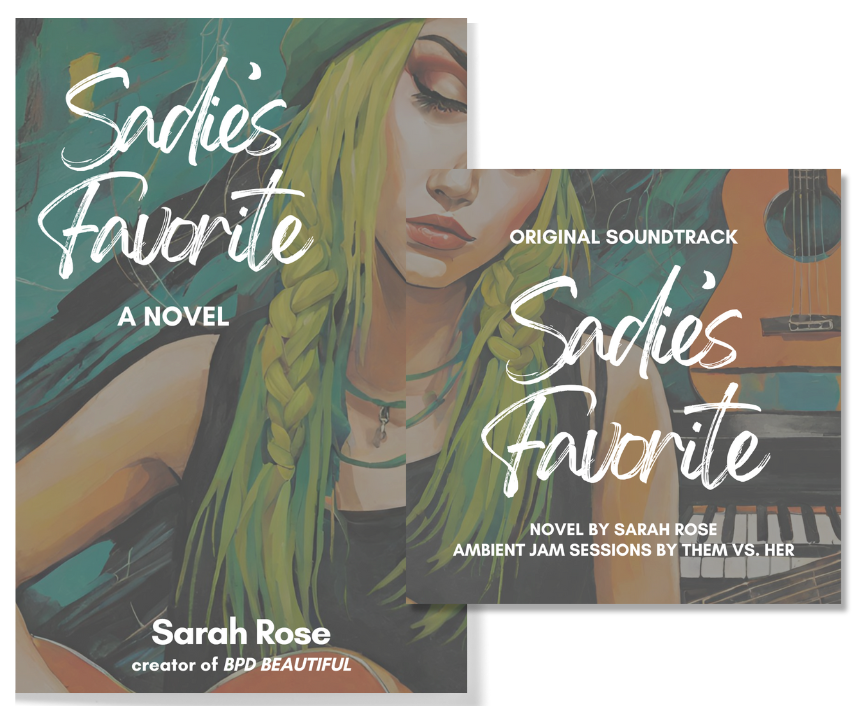
Sadie’s Favorite: A Novel + Original Soundtrack is a character-driven story about BPD recovery, trauma bonds and breaking away from abuse.
Examples of Splitting in Borderline Personality Disorder
In the section below (see section “Before You Read My Deepest, Darkest Thoughts” and “An Intense 5 Hour Long BPD Episode”), you’ll see me begin to split which caused me to devalue my at-the-time “favorite person” (FP), our relationship and myself.
For those who don’t understand what BPD splitting is, it comes down to “all or nothing” or “black and white” thinking. In essence, people with BPD have trouble with balancing between two extremes or opposing beliefs. If you’re still not sure how splitting plays out in the mind of someone with BPD, I hope reading the BPD episode I recorded below will help you.
Some examples of splitting thoughts in BPD are…
- “No one cares.”
- “I’m a bad person.”
- “I can’t change.”
- “They’re my everything.”
- “If only ____ had happened, things would be perfect.”
- “Nothing ever works.”
- “I’d rather die.”
- “It’ll ruin everything.”
- “It’ll fix everything.”
- “It’s not worth even trying.”
- “What’s the point?”
- “I’m worthless.”
- “They complete me.”
- “I can’t live without them.”
- “They’re the best thing that’s ever happened to me.”
10 things people with BPD may do while splitting are…
- Say hurtful things
- Ghost others
- Emotionally detach
- Cancel plans
- Over-analyze
- Isolate themselves
- Explode at things others view as no big deal
- Lash out unexpectedly
- Block people on social media
- Become irritable
- Jump to conclusions
Looking for Characters with BPD? The novel + original soundtrack Sadie’s Favorite by Sarah Rose explores BPD recovery and abusive “FP” relationships. Read First 6 Chapters.

Before You Read My Deepest, Darkest Thoughts…
[written in 2020]
Not only will you see me splitting in my documented BPD episode below, you’ll also see my more logical thoughts trying to talk myself down. Keep in mind—this is A LOT harder for those with BPD who are untreated or have more severe cases, especially if they lack a proper support system. I was in that boat once. Even with therapy, a DBT group and a loving support system…talking myself down feels impossible sometimes.
My perception of time during the BPD episode was most likely way off, because I was dissociating. Don’t take my minute recaps as literal. I do know the total episode (starting from before I started writing to the end of the text) lasted between 4 to 5 hours.
I wrote the below out by hand while it was happening. I typed it up two weeks after the fact. I edited the text a bit so it would be (a little) more coherent and added “after-thought” comments in parentheses. Then about 6 weeks later, I posted it.
An Intense, 5 Hour Long BPD Episode
Looking for Characters with BPD? The novel + original soundtrack Sadie’s Favorite by Sarah Rose explores BPD recovery and abusive “FP” relationships. Read First 6 Chapters.
I feel almost possessed. My thoughts are happening so rapidly, I can barely keep up and write them down. I’m multitasking between them to try and distract myself from the overwhelming darkness I’m currently in and have been in for about 3 hours now.
Just before I started writing this: I was crying because I remembered a fight between my FP [at the time] and I had from around 5 years ago. I remembered his cold, frustrated and resentful response to my desperate pleas for open communication. (We were in a much darker place back then—full of resentment, piss poor communication and untreated BPD)
Since I already felt completely and utterly worthless when I had the vivid memory, I lost it for a couple minutes until I felt numb again and decided to write this all down.
I think FP needs to come with me to a session with Ellen. (my therapist) Because we’ve been fighting more over the last month. (this isn’t fully true, I was having a bad week and we tend to have more misunderstandings on my bad weeks).
Maybe a couple of sessions together would help us. But now a very familiar, gut wrenching sense of dread comes over me. I worry I’ll get triggered during one of these sessions together. I think maybe we shouldn’t do it. I imagine scenarios in my head.
I can see us sitting on our bed talking with Ellen via video chat (thanks to covid). I see me getting triggered by something someone says and feeling ganged up on. I already feel the intense (bolded and underlined) embarrassment and deep rooted shame as if it’s happening now. I can feel the heat raising up my neck to my face, as these overwhelming emotions manifest into rage.
I suddenly remember I’ll never escape this pain because I will always have borderline personality disorder. And yes, pain. Because the feelings are intense, to say the least. (REMINDER: BPD is treatable! at the time of posting this, almost two months after I wrote it and 10 months into treatment—my BPD episodes have greatly reduced in frequency and most of all, severity.)
I’m witnessing someone I love getting gruesomely hurt in a tragic accident. Like I just lost them, forever.
It’s hard to describe how strong the feelings are with words. When my fears of abandonment or rejection get triggered, I feel as if I’m witnessing someone I love getting gruesomely hurt in a tragic accident. Like I just lost them, forever. My whole body feels traumatized and my emotions are unshakable. My fight or flight response kicks in and I usually pick the former until it gets to be too much. Then, I flee faster than you can blink.
A Closer Look at BPD
Sadie’s Favorite: A Novel + Original Soundtrack explores BPD recovery, favorite person relationships and healing from trauma bonds.
I just put down my pen and started crying again. My whole existence, forever having BPD, feels bleak and hopeless. Why should anyone suffer with this? I wish I could be numb again. I tell myself to keep writing, because it seems to help get me out of an emotional mind and into a more logical place.
I think 3 months of coronavirus lockdown has exasperated my symptoms so gradually, that I’m only now realizing it. (eh, I don’t know about that. I’ve been making progress, if anything—even just writing this down when I couldn’t two months ago at Ellen’s request, is progress)
My favorite person is currently the only person, besides my son, that I see in person on a daily basis—thanks to the lockdown. No wonder my love obsession has only gotten stronger. I need more human interaction. I’m a loner but I’m not used to being this secluded. Even just going to the gym alone, but being around people, would help.
I imagine FP laughing at me and saying, “How would that help?” (has not ever happened—my mind loves to make up triggering situations) and that hollow, sense of dread feeling in my stomach returns. That all too familiar shame. I harp on that image in my mind for a moment then remind myself to write again since it was helping.
BPD forces me to get stuck in my own cycle of self abuse.
For the record, I really do hate torturing and traumatizing myself with regular daydreams of people I love acting out my worst fears. But it’s like the BPD forces me to get stuck in my own cycle of self abuse. (completely accurate)
The same as every other time I’m in the midst of a BPD episode, I feel exhausted mentally but don’t let myself rest. Like I need to punish myself. (even though you had to wake up early the next day, Sarah! —self sabotaging, a hallmark BPD trait, at its finest)
My thoughts quickly switch and I again find myself worrying about my relationship. OK, so to recap: spending too much time with FP has made me regress. I realize I have to go through a desensitization period again and try and separate myself. It also means I have to relearn to accept that he will sometimes go out without me again, as our state slowly reopens in phases to prevent a second wave of coronavirus.
All of this scares me to death even if I’ve done this all before to get to a healthier place. (before my BPD diagnosis, I thought I just had adult separation anxiety/codependency)
I fear these things and things like this because:
- I’m deathly terrified of being abandoned and for some reason, things like this feel like abandonment. I’m not fully sure why (Ellen thinks, in my case, that my childhood trauma has to do with it).
- I’m also terrified of missing out and of people I love having more fun without me. I guess because, in a way, these things feel like rejection.
I don’t really understand BPD’s reasoning. But I am self aware enough to know that these fears and my, at times, odd behavior to prevent these fears from becoming reality, are sometimes incredibly irrational. (hey, it’s my wise mind!)
I feel pathetic. (annnnd, it’s gone) Like a small child lost in an amusement park. I don’t want to control FP. I don’t want to be that wife. I hate that my fears sometimes scare me into trying to control everything and everyone. I absolutely hate it and I’m ashamed of it. I hate myself.
And just like that. I remember, vividly, when my favorite person had said, “It was bad in the beginning, the middle and the end.”
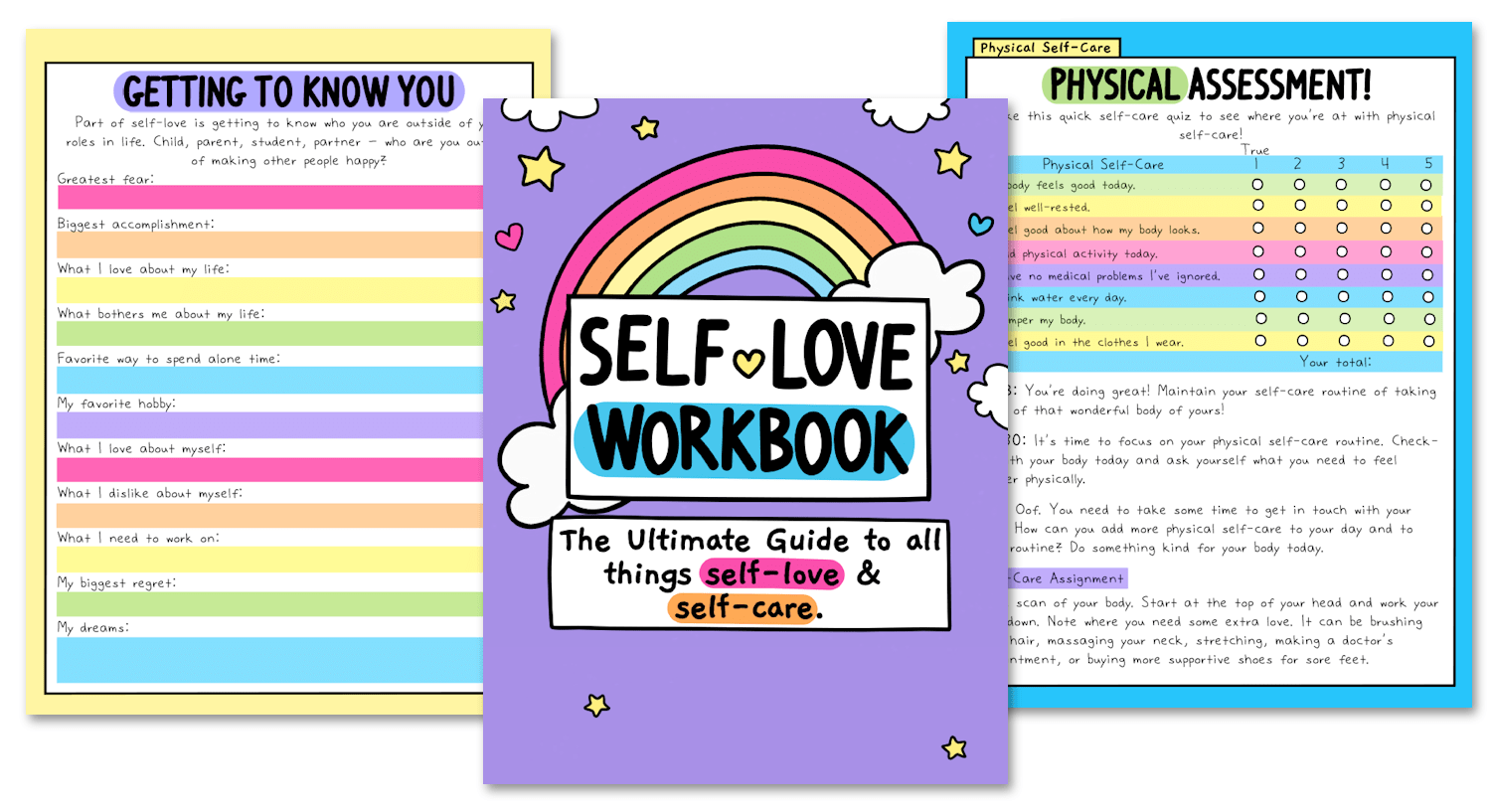
The Self-Love Workbook
This 103 page digital workbook comes with three different PDFs – full color, a version with no color backgrounds, and a black and white version (to save on printing costs). You get access to all three and you can print whichever one works for you!
DOWNLOAD NOW FOR $10Each .pdf is capable of being filled in digitally. With Adobe on your desktop computer or on an app like XoDo for your phone, you can type your answers into the .pdf and save your progress without ever needing to print it.
Once, I’d claimed things were, at one point, getting better between us but then we’d started fighting again. That was his response. (this was about 4 to 5 years ago during an argument. we didn’t know I had BPD at the time and we hadn’t started actively working on our communication yet. I don’t know what the point of harping on this memory is, since it has no bearing on FP’s feelings in the present day. that’s BPD for you).
It’s like I’m back in our old bedroom, hearing him mutter the words right next to me.
Rehearing those words in my head again spirals me back into the emotions. It’s like I’m back in our old bedroom, hearing him mutter the words right next to me. And the empty stomach feeling of shame is back instantly. I think of how I’m ruining the relationship, yet again.
I remind myself I’ll only keep doing this with other relationships, even the nonromantic ones. I start crying again. Because I don’t want to be alone or live a life without FP. But it feels like I have no choice. (oh, Sarah.)
I think of how hard it must be for FP to deal with all of this. More guilt. More shame. He can’t even talk to me about it, because he knows I get triggered too easily. More guilt. More shame. I wouldn’t want to be with me. Am I projecting my feelings about myself onto him? (most definitely, yes) No, I believe they’re his feelings. Because anyone rational would see that I’m not worth the trouble. (sigh)
It’s been 2 hours. 2 hours of sitting here writing and crying, writing and crying. It feels like it’s been 30 minutes. Where has my night gone? It’s 2 in the morning. I don’t even remember everything I wrote.
At this point, I’m completely numb and uncaring. My eyes are heavy and burning. My hand hurts…I’m done.
Two Weeks Later
[written in 2020]
Not all of my BPD episodes are as extensive or as severe as the one above was. Sometimes it disappears as quickly as it comes. Two weeks later—I don’t feel the way I felt above now. My emotions and thoughts can pass quickly, or they can linger and build up if it’s caused by a consistent trigger.
I, personally, dissociate during more severe BPD episodes. The dissociation is the numbness I kept mentioning, where I feel as though I’m floating and my mind feels separated from my body. I lose time while dissociating. It’s a coping mechanism I’ve been doing since I was 11.
Not everyone with BPD dissociates but a lot of the people with BPD that I’ve spoken to or have come across online, do.
BPD Episodes: Impact & Dangers FAQs
70% of people with BPD will attempt suicide at least once in their lives. 10% of those people follow through on the act. That’s the absolute worst a BPD episode can get. Since people with BPD tend to think in all or nothing terms, and they experience very intense emotions – suicide can sometimes feel like the only way out. Add that in with impulsivity & self destructive behavior, other often overlooked BPD symptoms, and you have a dangerous mix.
(Read ‘Top 30 Questions About BPD (For Loved Ones‘)
A BPD episode can last for a few minutes, an hour, a couple hours or even for several days. The length of a BPD episode will almost always depend on the gravity of the trigger as well as the person with BPD’s level of treatment and progress in recovery. People with BPD can also and often do struggle with depression, which can further exacerbate and prolong BPD episodes.
Back in my sickest days, I would (unknowingly) have a BPD episode for several days and then would often fall into a longer period of depression – with my longest depression lasting for a year straight, initially sparked by an abandonment by my then favorite person. There was a time I thought I was bipolar due to these periods of depression and longer lasting episodes, however, I never had offsetting periods of mania.
Borderline Personality Disorder is Serious
If you know someone with BPD or suspect someone you know has BPD—please remember borderline personality disorder is real. It’s a serious condition and not something to be mocked, stigmatized or brushed off. If your girlfriend, boyfriend, spouse, family member or friend with BPD threatens suicide or openly idealizes it, take. them. seriously.
(See BPD / DBT Resources)
The person you know with BPD is struggling more than you can imagine. They may put on a tough, emotionless face or be completely hysterical. They may say outlandish or abusive things, or they may be abusive (which is never okay – BPD is no excuse) and have fits of rage. They may go to extreme measures to ensure themselves of your love and support or to prevent you from going out with friends.
Their behavior will appear completely irrational. But there’s more going on inside than meets the eye.
BPD makes you feel a life-or-death sense of urgency to prevent an abandonment (real or imagined). It screams in your ear and convinces you that people you cherish deeply will leave you, no matter what. It convinces you that people who love you, don’t love you and never did. BPD makes you feel deep rooted shame and absolute terror over everyday life situations. Situations that other people don’t bat an eye at. Which makes you feel misunderstood, discarded and left to rot.
Looking for Characters with BPD? The novel + original soundtrack Sadie’s Favorite by Sarah Rose explores BPD recovery and abusive “FP” relationships. Read First 6 Chapters.
But do you know what the worst part of BPD is? It’s when you’ve pushed your loved one past their limit, with your rage and embarrassing behavior—all due to these overwhelming fears your brain tricks you into believing. Because when that person’s limit is pushed to its fullest they really do leave. This is one thing I can confidently say is something I’ve seen happen to everyone I’ve met with BPD.
BPD makes you your own worst enemy. It’s a horrible mental hell. And it makes keeping friendships & relationships even harder than usual.
And that’s why it’s so important to seek treatment. Recovery is possible and the rate of recovery is higher than most realize.
BPD Episodes: Coping with BPD FAQs
Yes. Sleep, nutrition, exercise, and reducing substance use all lower vulnerability to BPD triggers. DBT emphasizes treating physical illness and balancing lifestyle factors to reduce borderline episodes. Regular routines support nervous system stability. While lifestyle changes alone won’t cure BPD, they significantly reduce the intensity of episodes BPD sufferers experience. Healing is holistic — mind and body together.
Yes. DBT is one of the most researched and effective treatments for reducing BPD episodes. Studies show DBT reduces self-harm, hospitalizations, and emotional reactivity. Learning how to stop a BPD episode early using skills like grounding and emotion regulation significantly lowers frequency. Other effective treatments include schema therapy and mentalization-based therapy. With consistent therapy, borderline episodes become less intense and less frequent.
Recommended Reading: Sadie’s Favorite by Sarah Rose
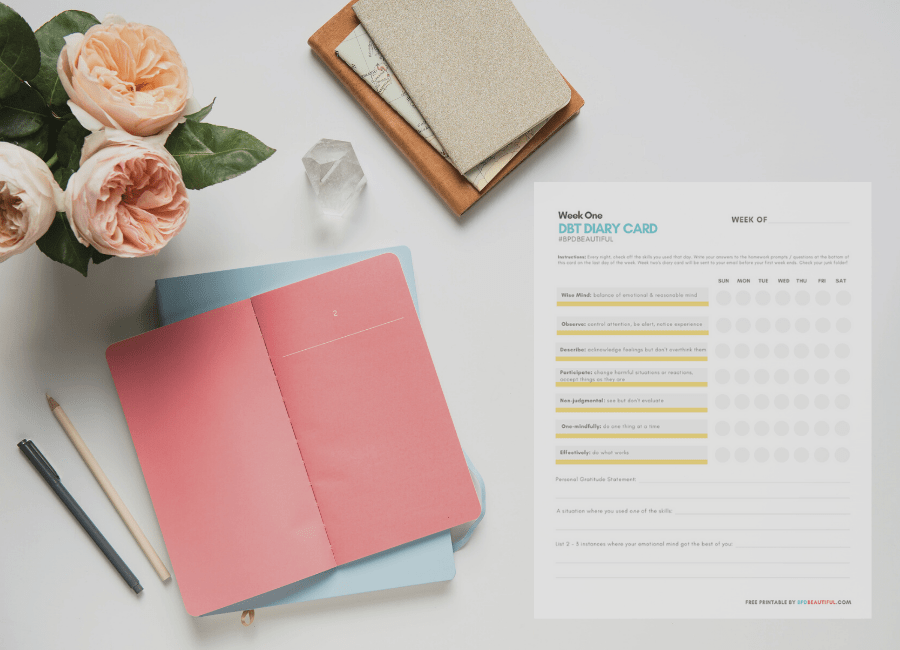
Yes, BPD triggers can shift as life circumstances and relationships change. Early on, certain abandonment cues may activate borderline episodes, but later different stressors may emerge. Healing also changes triggers — what once caused a borderline personality episode may become manageable. Tracking BPD triggers through journaling or DBT diary cards helps identify patterns. Awareness is power.
Absolutely. Identifying BPD triggers allows you to intervene early before a full BPD episode develops. DBT emphasizes vulnerability factors — sleep, stress, hunger — that increase reactivity. When you understand what does a BPD episode look like in its early stages, you can use coping skills sooner. Preventing episodes BPD sufferers experience often starts with trigger awareness. You can’t avoid all triggers, but you can prepare for them.
Recommended Reading: Sadie’s Favorite by Sarah Rose
DBT offers practical tools for managing BPD triggers and preventing borderline episodes. Skills include mindfulness (observing thoughts without reacting), distress tolerance (TIP skills, grounding), and opposite action. Learning how to stop a BPD episode often involves slowing down the nervous system first. Emotion regulation skills help reduce long-term vulnerability to triggers. These tools are research-backed and life-changing for a lot of people with BPD (not all, some pwBPD see better results with other therapy methods).
10 Ways to Cope With BPD Splitting & BPD Episodes
Here are ten ways I’ve learned to manage my own BPD splitting thoughts.
- Remember a recent time you felt the opposite way
- Ask yourself: “What’s changed?”
- Ask yourself: “Is a total shift in beliefs or feelings justified?”
- Ask yourself: “Is there a more logical, middle ground view point I could have or think?”
- If in a devaluing split: think of 2 to 5 good traits the person, thing or situation also has.
- Use DBT what mindfulness skills, which are: observe, describe, participate.
- If in an idealizing split and things feel perfect: remember that nothing is ever full perfect but that doesn’t mean it isn’t good.
- Save screenshots of validating texts from loved ones. When splitting on one of them or yourself, re-read their texts.
- Try to wait to act on thoughts & feelings until things settle down.
- Distract yourself. Give yourself permission to think about it later.
(Read ‘BPD Splitting: What a Devaluing Split Looks Like’)
BPD Episodes: FAQs for Loved Ones
During borderline episodes, validation is key. Acknowledge the person’s feelings without reinforcing harmful behavior. Avoid escalating conflict, and focus on calm, steady communication. Understanding what does a BPD episode look like helps loved ones respond with empathy instead of frustration. Encouraging DBT skills like grounding can help de-escalate a borderline personality episode. Compassion reduces shame and speeds recovery.
Avoid phrases like “You’re overreacting” or “Calm down.” These statements invalidate emotions and can intensify BPD episodes. During borderline episodes, the nervous system is already overwhelmed. Minimizing feelings can escalate the situation. Instead, validate the emotion while maintaining boundaries. Validation does not mean agreement — it means acknowledging emotional reality.
Do’s & Don’ts of Supporting a Loved One During BPD Episodes
Here are some do’s & don’ts to support a loved one with borderline personality disorder while they’re having a BPD episode.
Do:
- Listen with empathy.
- Allow their emotions to be expressed verbally.
- If they’re venting, remain silent while showing concern.
- Ask them: “How long have you felt this way?”
- Ask them: “What triggered these feelings?”
- Be attentive & calm.
- Be prepared for mixed signals.
- Be responsive (if they’re receptive to your words) and validate their feelings.
- Understand that BPD is not their fault (but it is their responsibility to fix!).
- Set & maintain healthy boundaries.
Don’t:
- Take offense to wild or false accusations.
- Be defensive or argumentative.
- Try to make intense feelings go away.
- Deny or minimize their feelings, even when they’re distorted based.
- Try to talk them out of their feelings. Just hear them out.
- Reinforce harmful or destructive behavior.
- Ignore threats of suicide or self-harm.
- Neglect yourself or your own needs.
- Believe they can ‘snap out of it.’
Important Note: if your person with BPD refuses to seek help and you are being abused, no amount of advice on this blog will help you stop being abused or help your loved one change. BPD is not an excuse to abuse others nor is it a reason you should stay in an abusive relationship. Sometimes the best thing to do is to leave. While BPD is treatable, it’s up to the person with BPD to decide to start recovery. It’s not on the loved one to help them change.
What To Do If You or Someone You Know Has BPD
If the person you care about with BPD is untreated, they need to seek professional treatment (DBT therapy is usually a good start) and you need to learn how to cope with the disorder. It won’t be a walk in the park, but if you two work together your relationship or friendship could come out much stronger.
(Free Family Connections Program for Loved Ones Affected by BPD)
To do your part—you need to commit to having an intense amount of patience and empathy, to be able to see through the debilitating symptoms of BPD. And you need to be able to assert and maintain your own boundaries to someone who may frequently push them. It’s not an easy job and not something you should be quick to commit to if you’re feeling unsure.
If you’re the person with BPD, you need to commit to challenging your thoughts, facing scary triggers and learning new skills. It may seem impossible but we can be capable of rewiring our brains. Don’t waste another day suffering with BPD without having the support of a professional.
(Find a DBT Certified Therapist)
Yes, borderline personality disorder can wreck havoc on the person with BPD’s and their loved ones’ lives. But it’s treatable and there is hope.
If you have BPD, don’t give up on yourself. If you’re someone else’s favorite person or caregiver, I hope this helped shed some light on what your loved one goes through when they’re acting in a way you don’t understand. Chances are they don’t fully understand it either.
Stay strong.
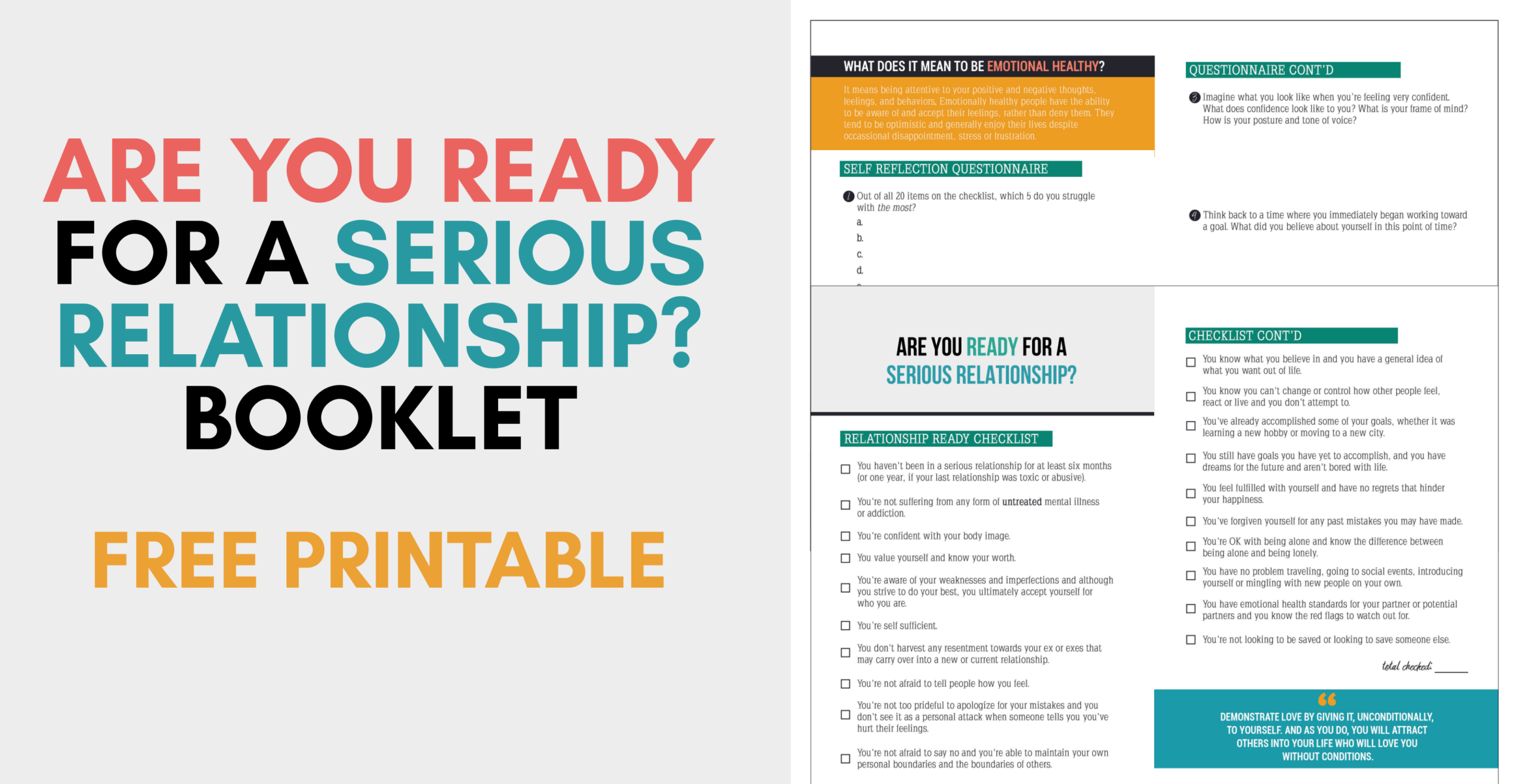
DOWNLOAD FREE PRINTABLE
BPD Resources
BPD in Fiction: Sadie’s Favorite by Sarah Rose is a Novel + Original Soundtrack that touches on BPD recovery and overcoming toxic “favorite person” (FP) relationships.
Join a Support Group: Study healthier coping skills with others. For people with BPD 18+ worldwide. Secure your spot! Join now.
Private Coaching: Get 1-on-1 support from someone with lived experience of BPD and remission by booking a call.
Manage your BPD symptoms with a printable workbook.
See our recommended list of books about BPD.
Start a Discussion
Do you have borderline personality disorder? Did you relate to this post? Have you had BPD episodes similar to mine? Or, do you know someone with BPD / are someone’s favorite person (FP)? Please share your experiences in the comments. I’d love to connect with other people who have BPD or deal with it on a regular basis.
Help end the stigma of borderline personality disorder by spreading the word about BPD Beautiful, an emotional wellness & BPD Blog. Please share this post with someone if you found it inspiring!
Pin This Post
Liked this post? Please help support BPD Beautiful and spread BPD awareness by pinning it on Pinterest.










Leave a Reply
You must be logged in to post a comment.